
Maricopa County Criminal History Checks
A sound search follows the record from its source. Start with the Superior Court Criminal Department when a felony case is likely. Use Justice Court or the relevant municipal court for lower-level matters. The MCSO custody list answers a different question: whether someone is in county jail now or was recently booked. A police report remains with the agency that wrote it.
Gather the full name, date of birth, likely city, and any case, report, or booking number first. Those details cut false matches in a county with many courts and police departments. Follow this order:
- Search Superior Court by case number or by name and date of birth for felony records.
- Check Justice Court and the proper city court when no Superior Court case appears.
- Use the MCSO Daily Jail Population Report for current county custody and booking fields.
- Ask the arresting police agency for the incident or arrest report.
- Order a certified copy from the Clerk when a formal court record is needed.
No Single Maricopa County Record Search
Maricopa County criminal records are split by event and custodian. Phoenix, Mesa, Chandler, and other cities keep their own police reports and municipal files. MCSO keeps county jail intake data. The Clerk holds Superior Court records, while Arizona DPS stores fingerprint-linked repository history under stricter release rules. A missed result often means the wrong system was searched, not that no record exists.
The Maricopa County public records portal is the broad request fallback. It routes commercial and non-commercial requests by department, but it does not turn every county record into one database. The official county portal shown here helps a requester choose the proper office.
Online court searches also use different fields. Superior Court accepts a case number, a name, or initials with a date of birth. Justice Court separates Name, Business Name, and Case Number paths. The statewide Public Access site adds a verification step before its case and minute-entry searches. A date of birth can be vital when names are common.
| Official channel | Useful search fields | Best use |
|---|---|---|
| Superior Court | Case number; name; initials and DOB | Maricopa County felony case information |
| Justice Court Case History | Name; business name; case number; DOB | Limited-jurisdiction case history |
| Arizona Public Access | Verification; case search; minute entries | Participating Arizona courts |
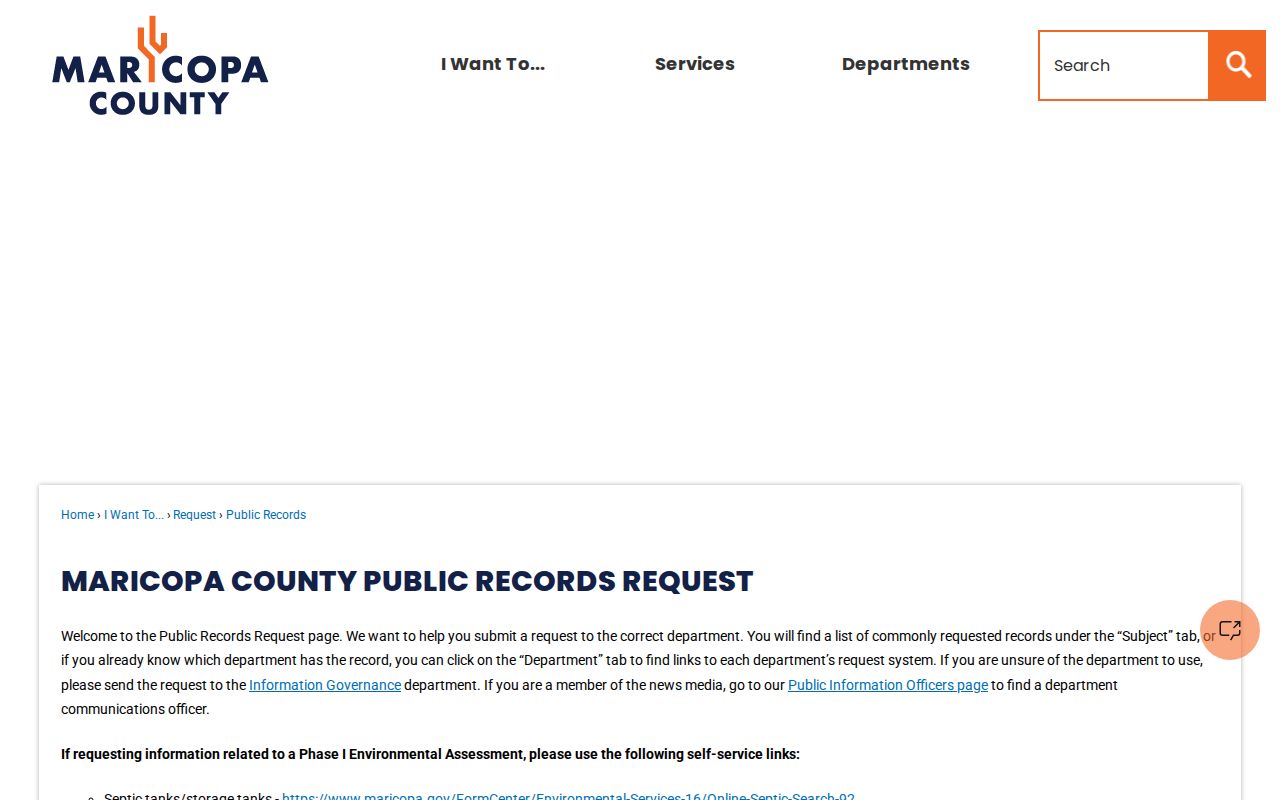
The route-by-department design reflects how Maricopa County criminal history is actually kept.
Official Background Checks in Arizona
The Arizona Department of Public Safety Central State Repository receives qualifying arrest and disposition data from criminal justice agencies. Arizona does not provide a general public, statewide name search for repository records. A person may review their own record for accuracy and completeness through the fingerprint-based record-review channel. Authorized checks also follow the statute or agency instructions tied to their purpose.
The DPS Public Services Portal is the online starting point for a record-review request. It requires an account and does not replace court searches. The portal screen below shows that controlled entry point.
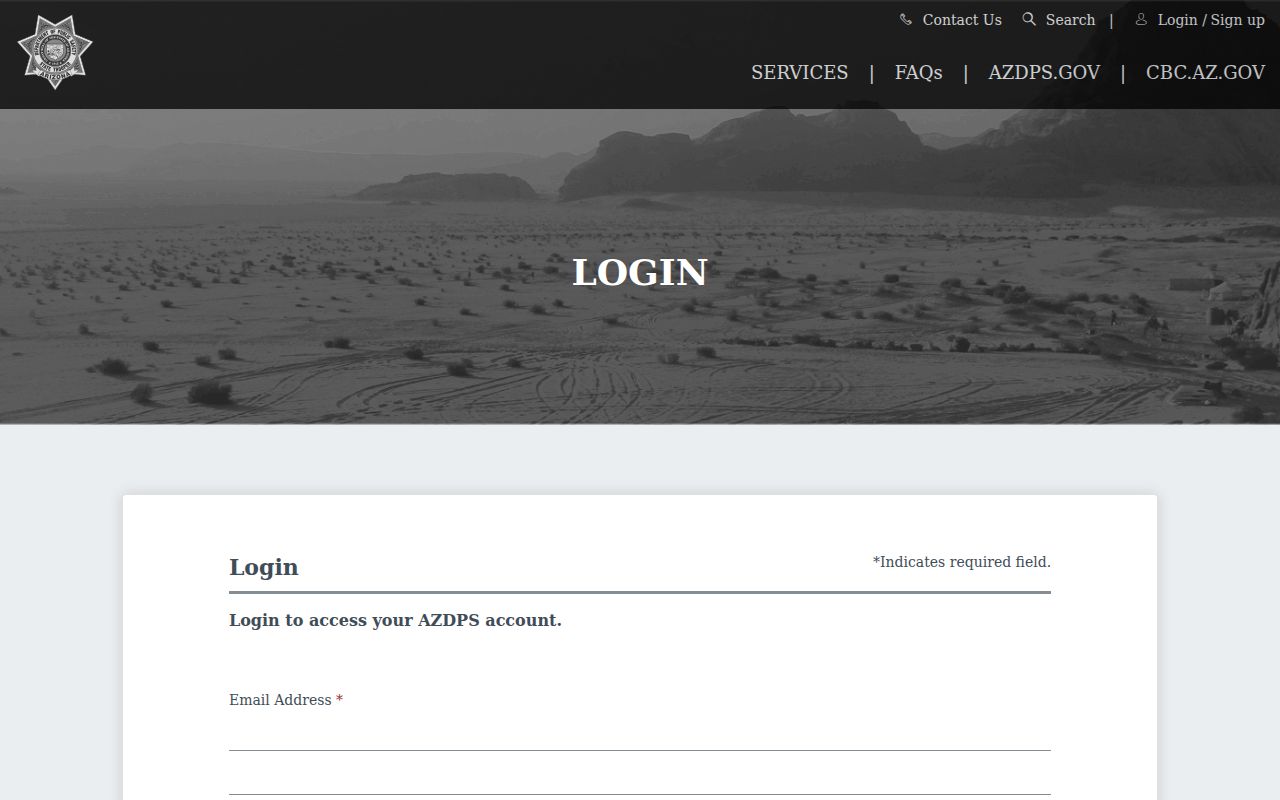
For help with personal record review, DPS lists (602) 223-2000, Option 2, then Option 3.
Maricopa County Records Versus DPS History
A court file and a repository history serve different needs. The court file tracks one prosecution through charges, hearings, rulings, disposition, and sentence. DPS ties reportable events to fingerprints and identity data across Arizona. A Phoenix clearance letter is narrower still because it searches local Phoenix Police records only.
The DPS criminal-history page explains the restricted self-review path. Its official page is pictured here because it is the correct source for repository access, not a public people finder.
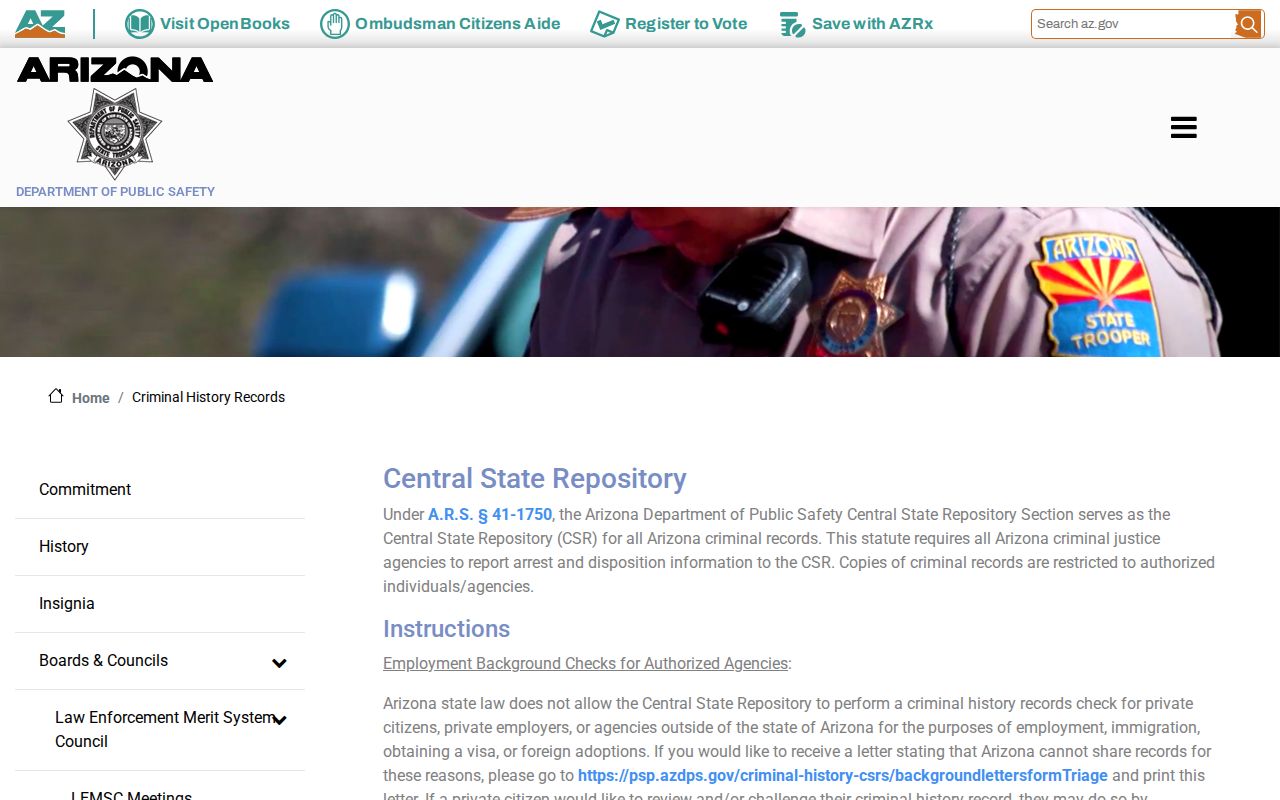
For a case outcome, return to the court. For the subject's statewide fingerprint record, use DPS.
Kinds of Criminal Records
Each Maricopa County record marks a different point in the justice process. An incident report states what police documented. A booking entry records custody intake. A complaint, information, or indictment begins the filed charge. A docket then tracks court action. Repository entries may later connect the arrest, disposition, sentence, and release.
- Arrest and booking records: held by the arresting agency and MCSO when county booking occurs.
- Court case files: kept by Superior, Justice, or municipal courts according to jurisdiction.
- Repository history: kept by Arizona DPS and released only through allowed channels.
- Warrant records: tied to the issuing court and its case rather than one confirmed sheriff search.
- Custody and supervision records: divided among MCSO, Adult Probation, and ADCRR.
Arizona's statewide court gateway is useful for participating courts. The Public Access to Court Information screen shown below begins with verification and excludes several protected case types.
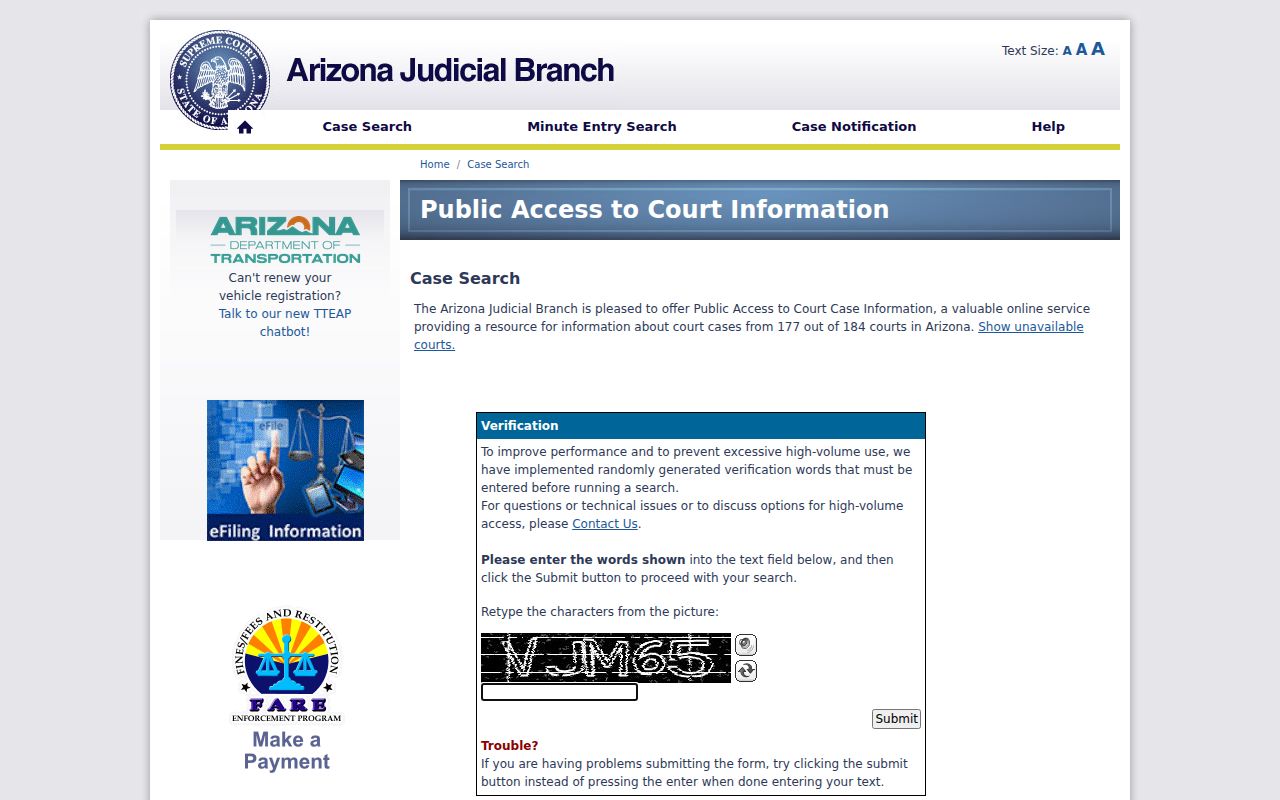
Sealed, juvenile delinquency, victim, witness, and other restricted data will not appear there.
Maricopa County Jail and Prison Records
MCSO jail data covers pretrial and county custody. The Daily Jail Population Report includes booking number, name, demographic fields, status, dates, and charges. It is a custody list, not proof of conviction. Intake Transfer and Release at 2670 South 28th Drive handles intake, releases, self-surrenders, transport, and initial court work through four courtrooms.
Sentenced state-prison custody belongs to the ADCRR Inmate Data Search. County jail and state prison records should never be treated as one roster. A person may leave MCSO custody and later appear in ADCRR after sentencing and transfer. The court docket remains the best source for why that move occurred.
The local facility list adds useful context. Lower Buckeye Jail is MCSO's largest detention site and includes medical, mental-health, and juvenile-remand space. Watkins Jail is a newer direct-supervision facility. Estrella holds female classifications, while the 512 Facility is built for short-term, unclassified holding. These locations describe where custody is managed, not how a charge ended.
Maricopa County Criminal Records: What They Contain
The fields depend on the source. A Maricopa County court case may show a judge, filings, minute entries, charge status, financial terms, and document links. A jail record focuses on intake and custody. A DPS repository record links identity and reportable justice events through fingerprints and a process control number.
| Name & Identifiers | Name, aliases, date of birth, and fingerprint-linked identity fields where authorized. |
|---|---|
| Arrest / Booking Data | Agency, report number, booking number, dates, status, and charges at intake. |
| Charges & Statutes | Filed offense descriptions, statute citations, class, and later amendments. |
| Disposition | Dismissal, plea, verdict, or other final result for each filed charge. |
| Sentence | Custody, probation, fines, fees, restitution, and court-ordered terms. |
| Custody / Supervision | MCSO status, ADCRR placement, probation, or release information by custodian. |
Read the dates and the source label before drawing a conclusion. Charges at booking can differ from those filed or resolved in court.
- Booking
- The jail intake event that creates a booking number, photo, fingerprints, and custody record.
- Minute entry
- An official court entry recording an event, order, ruling, or hearing result.
- Disposition
- The outcome of a charge or case, such as dismissal, plea, or verdict.
- Process control number
- The identifier used in Arizona fingerprint and arrest reporting to the state repository.
Maricopa County Criminal Court Record Counters
Downtown Phoenix has several nearby buildings with different roles. The Superior Court Central Court Building is at 201 West Jefferson Street. The South Court Tower at 175 West Madison Street holds much of the criminal court operation. The Clerk's Downtown Justice Center is at 620 West Jackson Street, while the Customer Service Center is at 601 West Jackson Street.
For case information, call the Criminal Department at (602) 506-8575 when the online search fails. For copies, use the Clerk at (602) 372-5375. Clerk copies cost $0.50 per page and certification costs $35. Visitors pass security screening, and recording devices require court approval.
Criminal Department
South Court Tower
175 W. Madison St.
Phoenix, AZ 85003
(602) 506-8575
Clerk Service Center
620 W. Jackson St.
Phoenix, AZ 85003
(602) 372-5375
Arizona Public Access Laws
Arizona Public Records Law begins with broad inspection rights but yields to specific restrictions. That is why a public court docket or current jail list can be open while DPS cannot confirm whether an unauthorized requester has repository history. Custodians may charge permitted copy and postage costs and may ask whether a request is commercial.
Key Arizona laws:
A.R.S. § 39-121 opens public records for inspection unless another law restricts them.
A.R.S. § 39-121.01 governs requests, copies, fees, and commercial-purpose statements.
A.R.S. § 41-1750 defines repository history and limits its release.
A.R.S. § 13-911 provides a sealing path for qualifying records.
The county request interface illustrates this department-based process, while DPS and courts apply their own release laws.
Maricopa County Warrant Record Routes
No single official MCSO active-warrant search was confirmed in the research. Route the search by issuer. Superior Court, a Justice Court, Phoenix Municipal Court, Mesa Municipal Court, Chandler Municipal Court, or another city court may issue a bench or compliance warrant. Search the case, then contact that court before trying to resolve payment or appearance terms.
The Arizona eAccess portal can provide unrestricted Superior Court documents, while Public Access supplies case information. The eAccess interface pictured below is a document channel, not a warrant list.
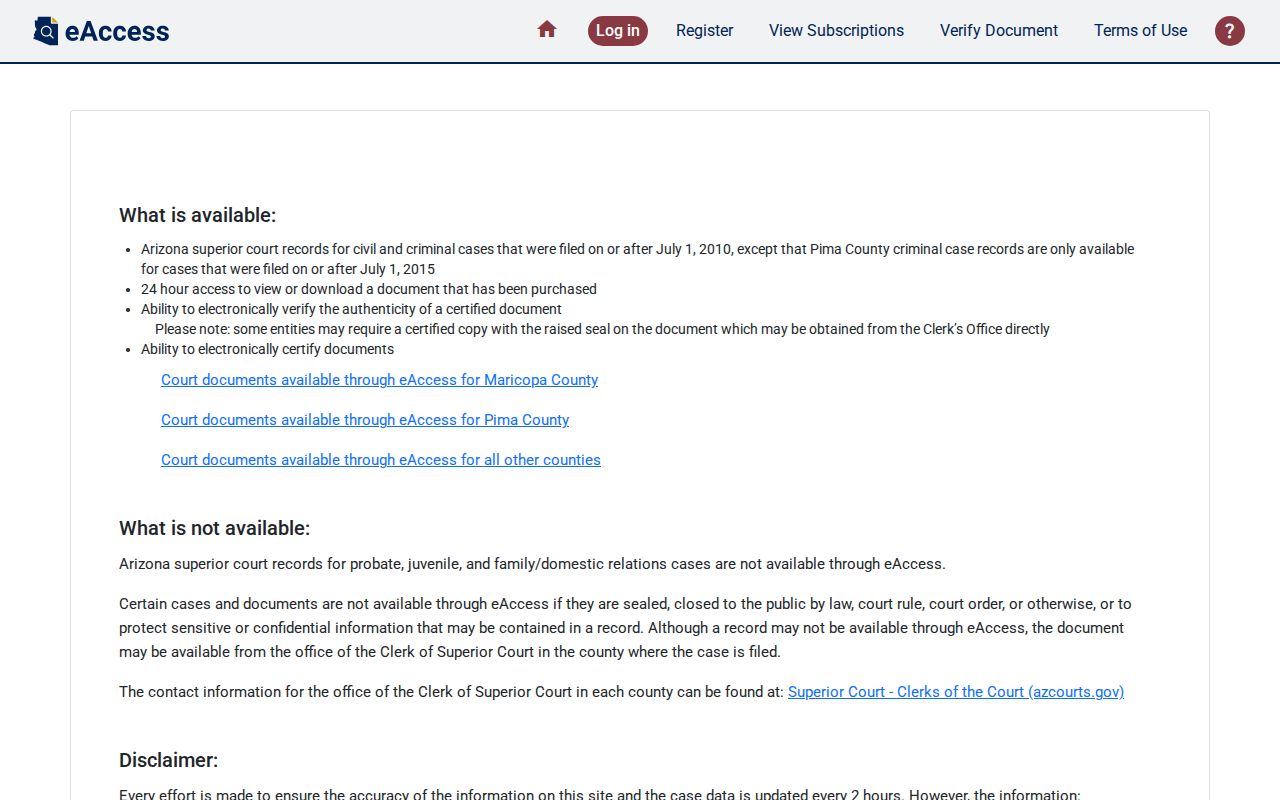
If a warrant led to a booking, MCSO may show the custody event, but the issuing court remains the source for the warrant status.
Restricted, Sealed & Expunged Records
Arizona uses distinct forms of relief. Under A.R.S. § 13-911, a person may seek sealing for qualifying arrests without charges, dismissed or not-guilty cases, and completed eligible convictions. A set-aside under A.R.S. § 13-905 releases certain penalties and adds an annotation, but it does not make the public record vanish. Marijuana expungement under A.R.S. § 36-2862 is a separate remedy.
Arizona Public Access also excludes sealed cases and juvenile delinquency data. A blank search result therefore is not proof that no event occurred. Someone reviewing their own record should compare the court file with DPS record review, then use the correct court process to address an error or eligible relief.
Relief also affects different systems on different schedules. A court order is the source document, while police, clerk, and repository systems may need time to apply the result. Keep a certified copy of the order and contact the office responsible for a record that still appears. The Clerk can address its case file, and DPS supplies a challenge process for a subject reviewing repository history.
Maricopa County Criminal Probation Records
Adult probation in Maricopa County is part of the Judicial Branch. A public court docket can show that probation was imposed and can later show a petition to revoke or modify it. There is no simple public probation-status database. The Adult Probation Department can address appropriate requests at (602) 506-3581, while the court case supplies filed orders and hearing events.
The Adult Probation overview describes supervision, victim services, and rehabilitation functions. Its official page is shown below.
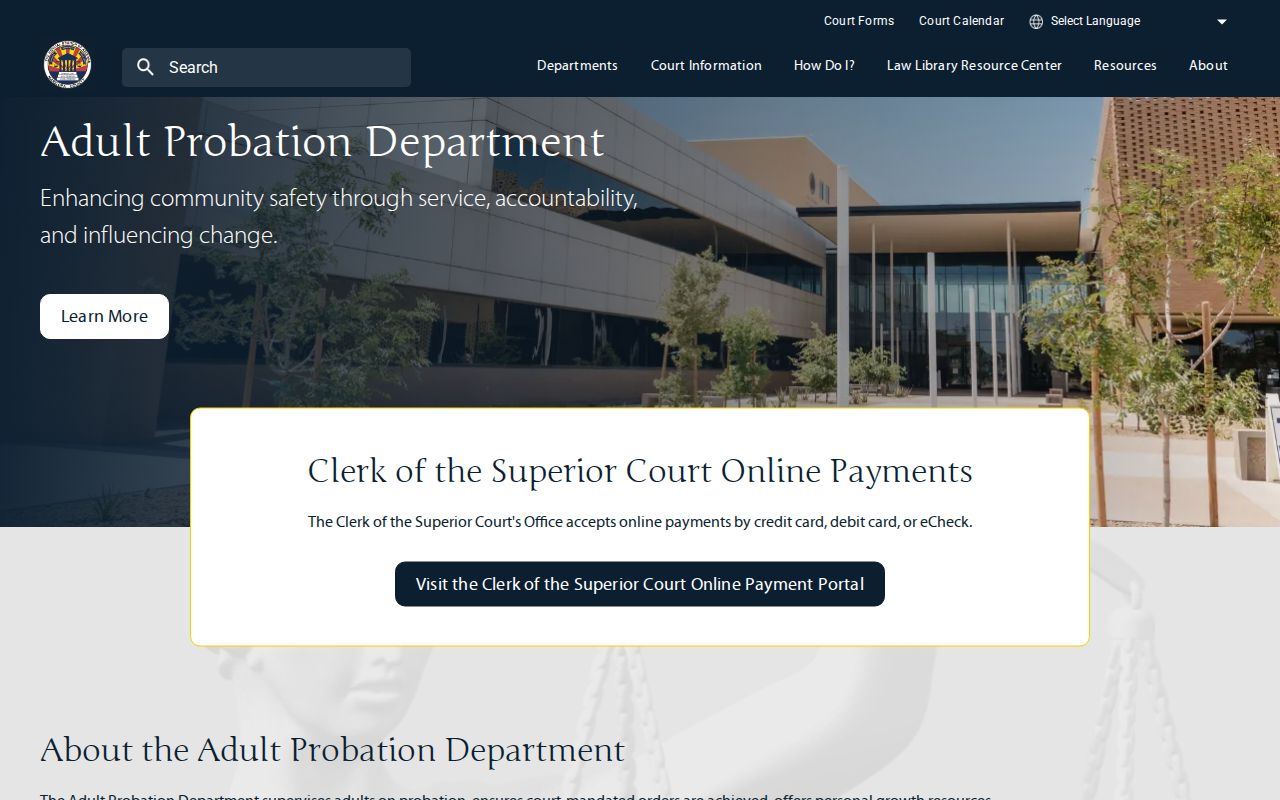
State prison release and community supervision instead route through ADCRR and the Arizona Board of Executive Clemency.
Maricopa County Criminal Records at MCAO
The Maricopa County Attorney's Office holds prosecution records rather than the court's official docket. Its records team accepts online, email, fax, phone, mail, drop-off, and lobby-kiosk requests. The custodian is at 225 West Madison Street, 3rd Floor, Phoenix, with phone 602-506-1974 and fax 602-372-3844.
The MCAO request page shown below states the available channels and fees.
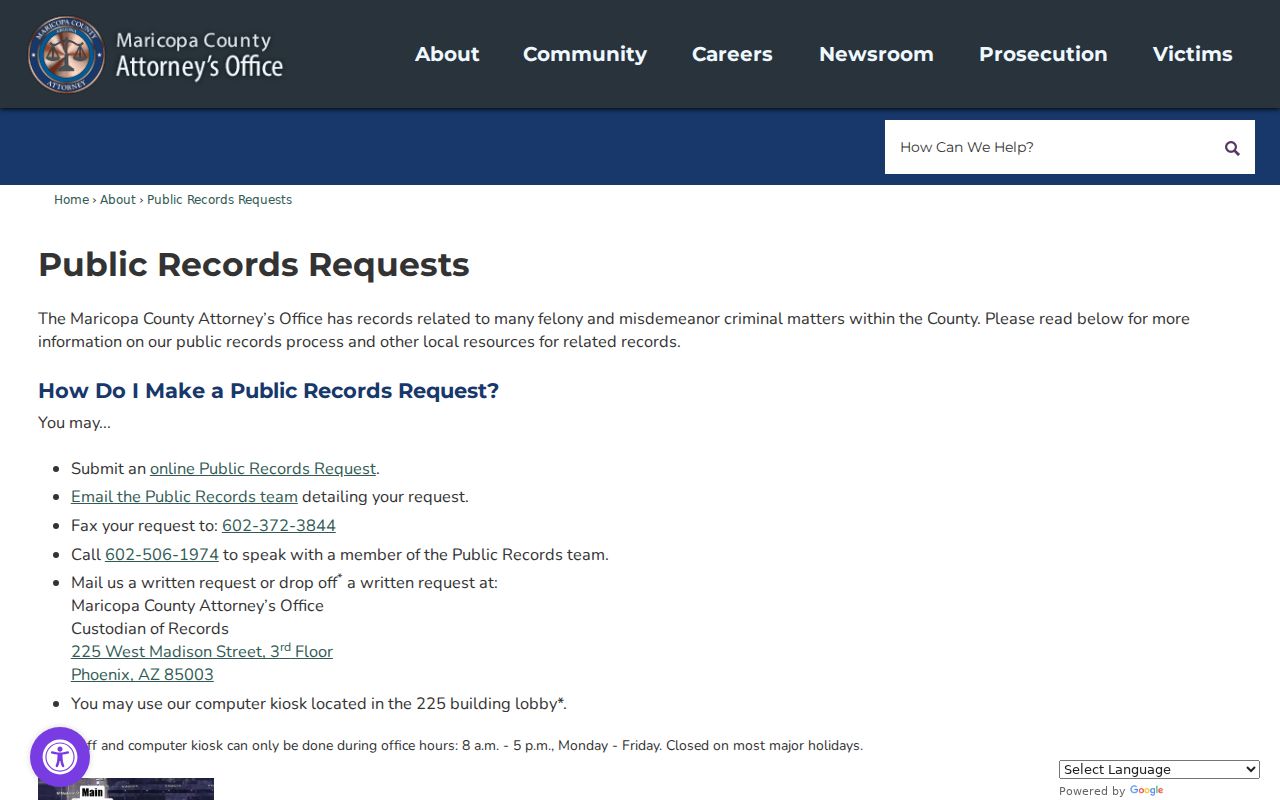
Printed pages cost $0.25, a CD-ROM costs $1, and a thumb drive costs $8. Electronic county file transfer and in-office inspection by appointment have no charge.
| MCAO record service | Charge |
|---|---|
| Printed page | $0.25 |
| CD-ROM | $1 |
| Thumb drive | $8 |
| Electronic Maricopa County transfer | No charge |
| In-office inspection by appointment | No charge |
City-by-City Criminal Records in Maricopa County
Phoenix, Mesa, and Chandler each have a police records channel and municipal court. Their reports do not become county court files merely because MCSO handles a booking. Start at the city for a police narrative, use MCSO for county custody, and move to the correct court for filed charges.
Phoenix Record Check
Phoenix Police records, local clearance letters, and Municipal Court files.
Mesa Record Check
Mesa CJID, GovQA requests, eCourt, and East Valley service points.
Chandler Record Check
Police open data plus separate pending and disposed case searches.
Maricopa County is the state's population center, so this city split matters. The county quick-facts page notes a 2022 population near 4.5 million and more than half of Arizona's residents.
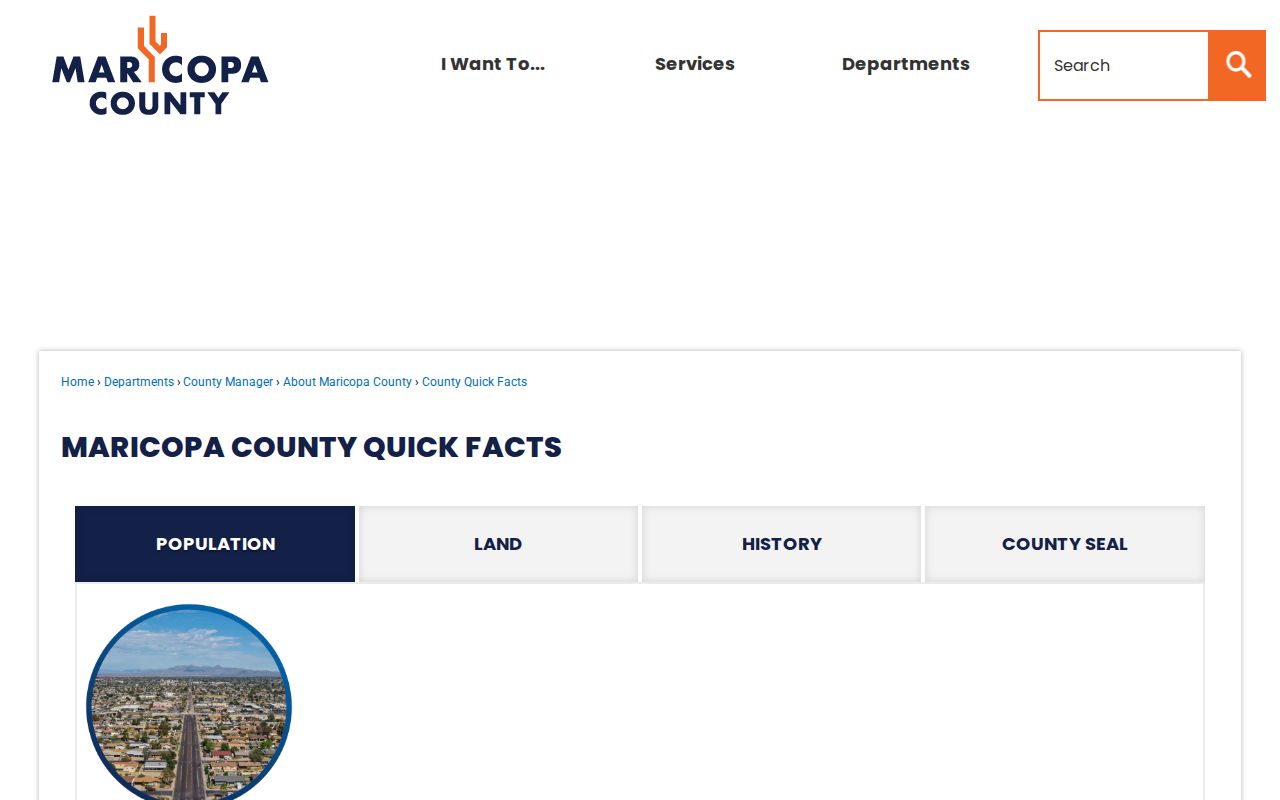
The county's size helps explain why records are spread across city, county, state, and federal offices.
Federal Criminal Records in Phoenix
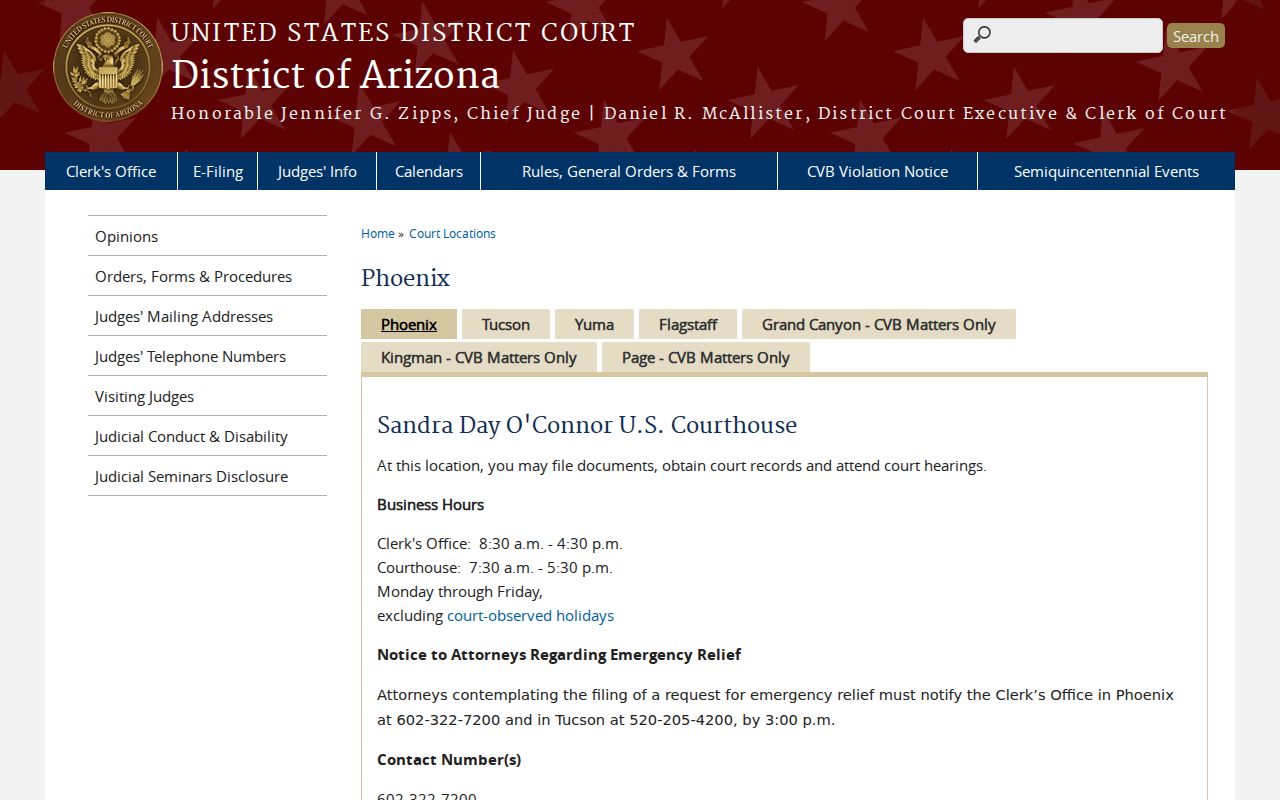
Federal cases do not appear as Maricopa County Superior Court files. The U.S. District Court for the District of Arizona operates its Phoenix courthouse at the Sandra Day O'Connor U.S. Courthouse. Federal custody searches use the Bureau of Prisons inmate locator, while a subject seeking their own federal identity history uses the FBI Identity History Summary process.
The Phoenix federal courthouse page pictured below supplies the official court contact point.
Keep federal, county, and city systems separate so a missing local result does not end the search too soon. A federal docket belongs to the federal court even when the arrest or courthouse is in Phoenix. The U.S. Marshals Service may handle federal custody before a prison placement, while the Bureau of Prisons locator covers its own population. Neither source replaces the federal court file, an MCSO booking record, or an Arizona DPS record review.